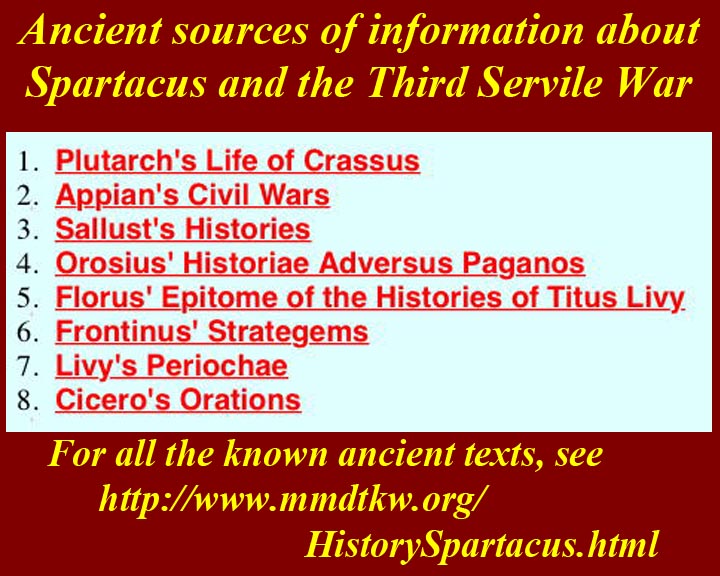
<---Sources from ancient times about the Third Servile War are sparse and total only about 15 pages. Most references are really only a few words and only a few are close to the time that Spartacus actually lived.
Various legends about Spartacus grew over the centuries.
Howard Fast's Communist inspired Spartacus novel, from which the movie was made, runs over 360 pages, most of which, of course, is just fiction.
English traslations of known ancient Spartacus/Third Servile War texts are at:
http://www.mmdtkw.org/HistorySpartacus.html
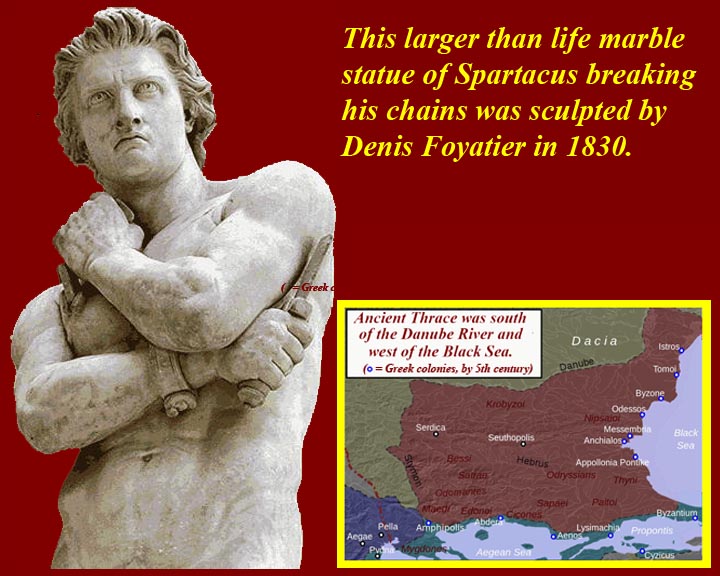
<---Ancient sources refer to Spartacus as a "Thracian", bit it is not clear whether he actually came from Thrace (see map inset) or if his gladiatorial identity was "Thracian" (if he wore Thracian armor to fight in the arena).
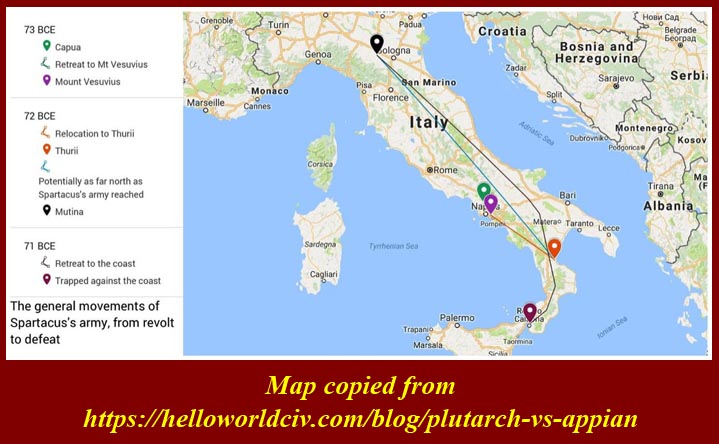
<---The gladiator/slave "army" led by Spartacus and Crixus marauded around Italy for three years (73-71 BC). After it split, a group led by Crixus was defeated by Pompey in the north and the larger group led by Spartacus was trapped and defeated by Crassus in the toe of the Italian "boot" when contracted transport by pirate ships never showed up.
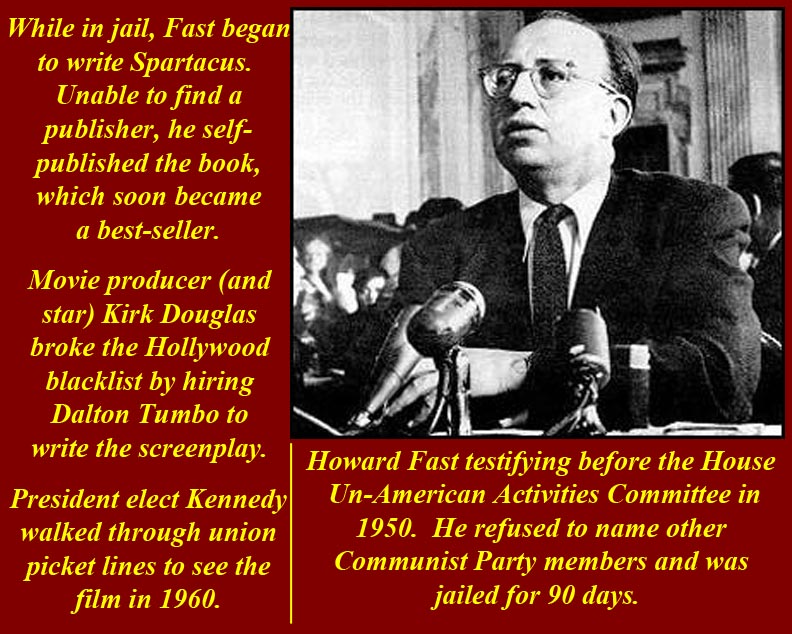
<---Howard Fast, an admitted Communist went to prison for refusing to implicate other party members, and started to write Spartacus while a prisoner. He self published the book when no publisher would print it, and it was a surprise best-seller.
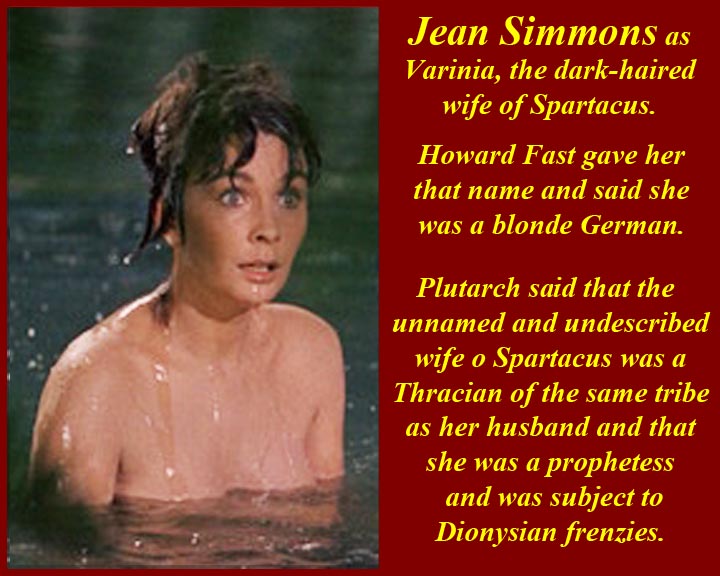
<---Jean Simmons as "Varnia". a Howard Fast invention, described by Fast as a Blond German, in one of the scenes sometimes locally censored in movie showings. (The most noteworthy censoring was the "shellfish/snails homosexual monologue.)
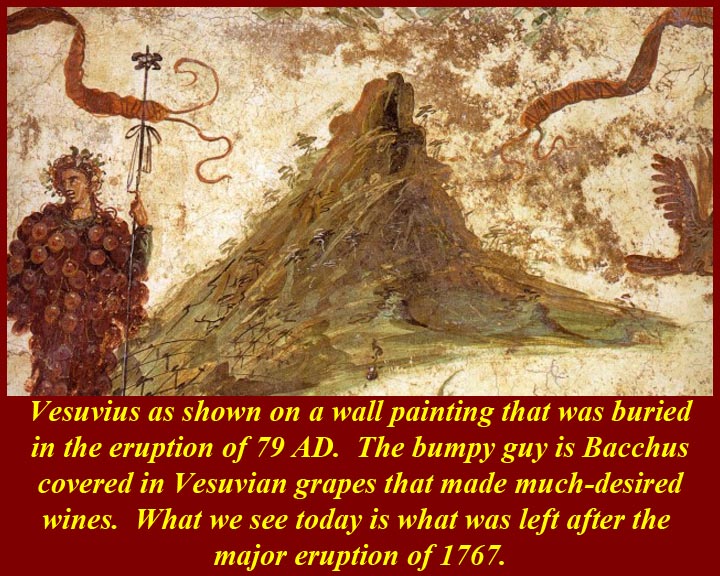
<---Vesuvius with slopes covered with grape vines and Bscchus standing by -- a pre-eruption fresco from Pompeii. Spartaculs led his rebels to the heights of Vesuvius for refuge and escaped from surrounding Roman legions by climbing down the back side on ropes plaited from vines. He was able to surprise and defeat the legions.
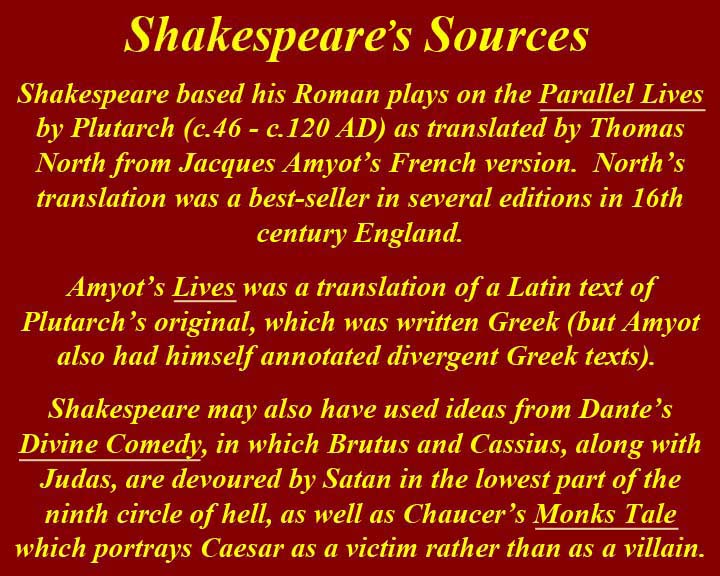
<---Shakespeare' Roman plays ultimately are derived from sections of Plutarch's "Lives" through Fernch, then English tralslations. Shakespeare's copy of the English (Thomas North) translation, with Shakespeare's marginal notes, is still available.
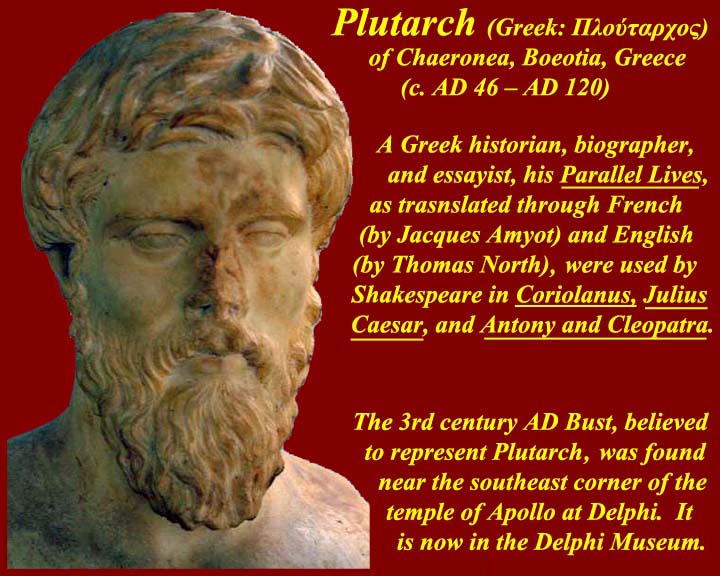
<---Plutarch, he ultimate source of Shakeare's Roman inffrmation, wrote in Greek, but Shakespeare's Plutarch hag gone through three translations -- to Latin, then French, then English.
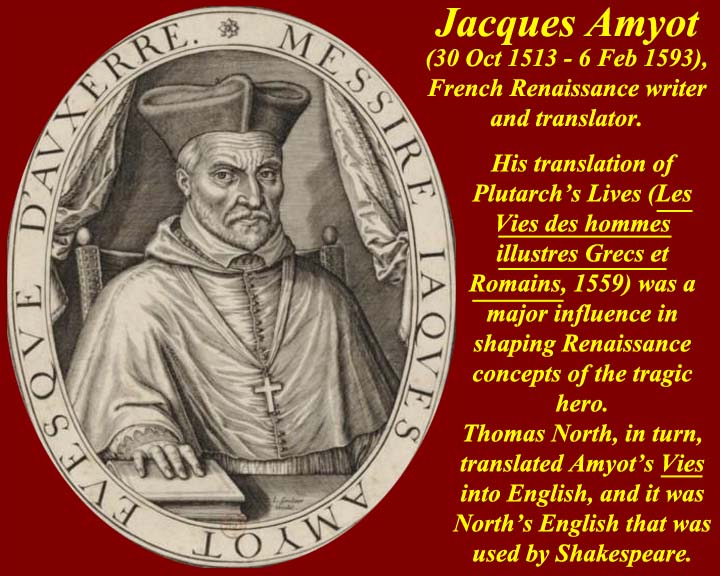
<----Amyot, the eminent translator who translate Plutarch from Latin into French
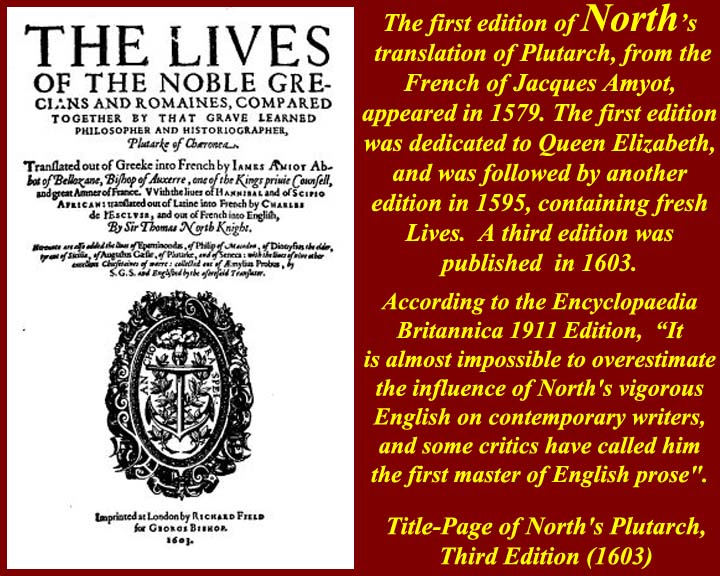
<---Shakespeare annotated and kept a copy of North's English translation of Amyot's Plutarch.
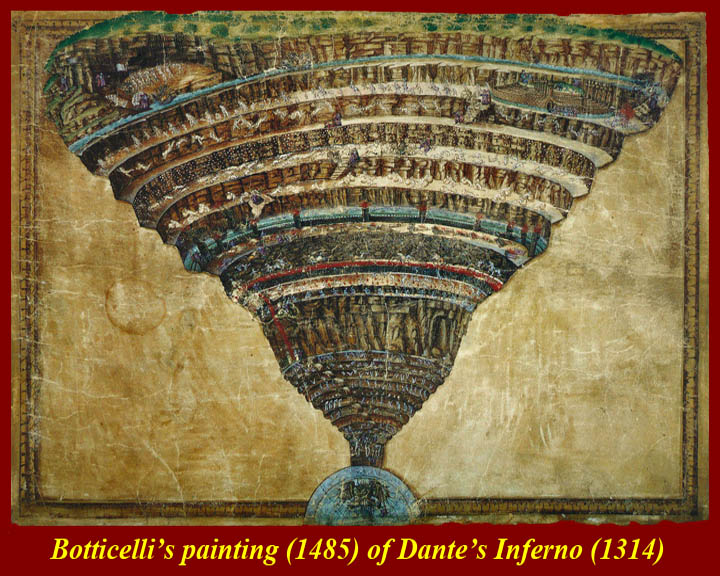
<---Botticelli famously illustrated Dante's Divine Comedy.
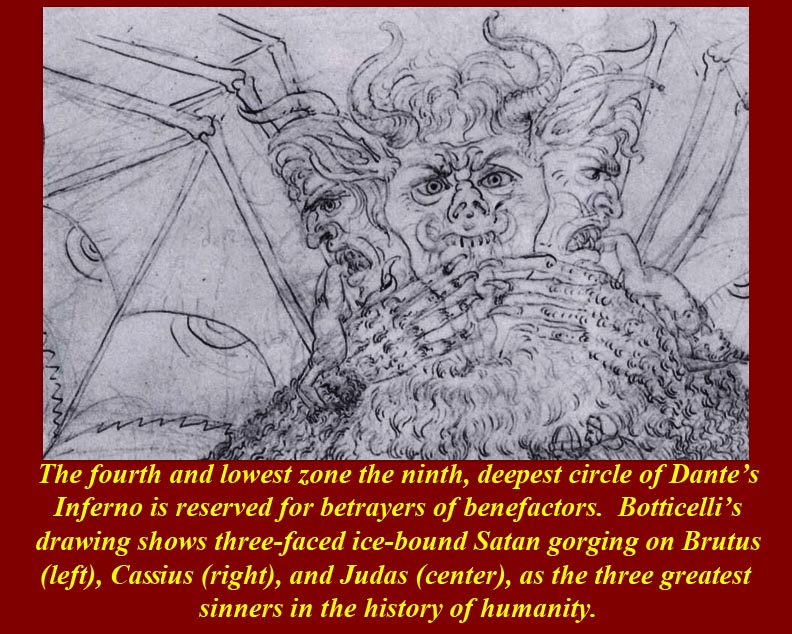
<---In the darkest deepest zone of the ninth and lowest liciest evel of the inferno, which was reserved for betrayers of benefactors, Botticelli shows three-headed Satan gorging on Brutus, Cassius, and Judas Iscariot.
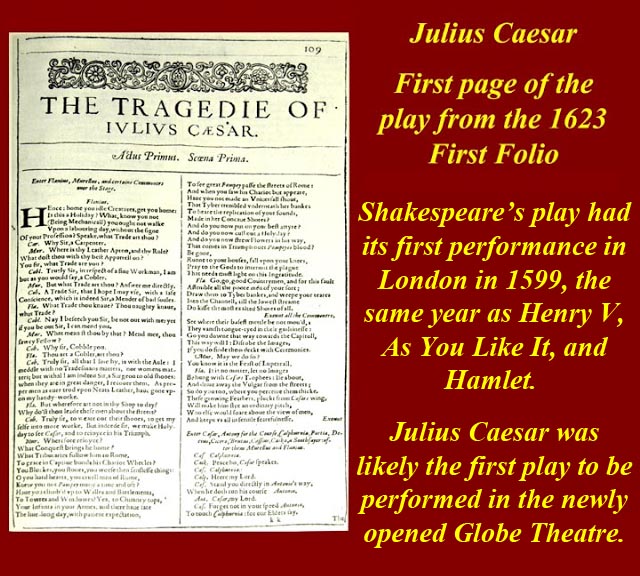
<---First page of Julius Caesar from the 1623 firs folio.
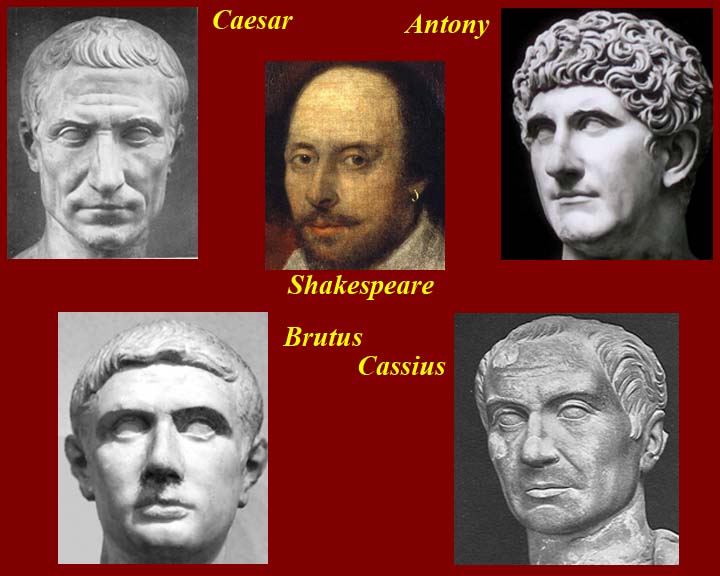
<---Real Life and Shakespeare's Julius Caesar protagonists.
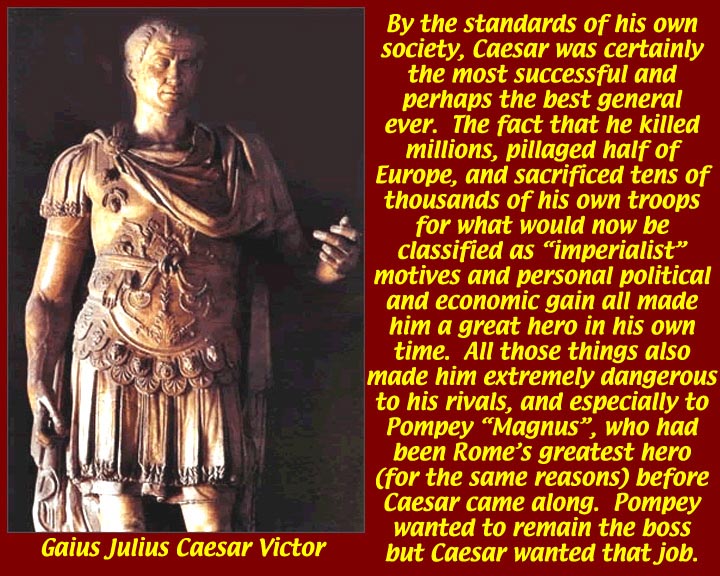
<---Julius in victor's garb and attributes. To post-WW2 sensibilities, Julius Caesar was a horrible person -- genocide, imperialism, colonialism, willingness to sacrafice his troops for personal and national gain. Up to WW2 all of those were usually positive virtues.
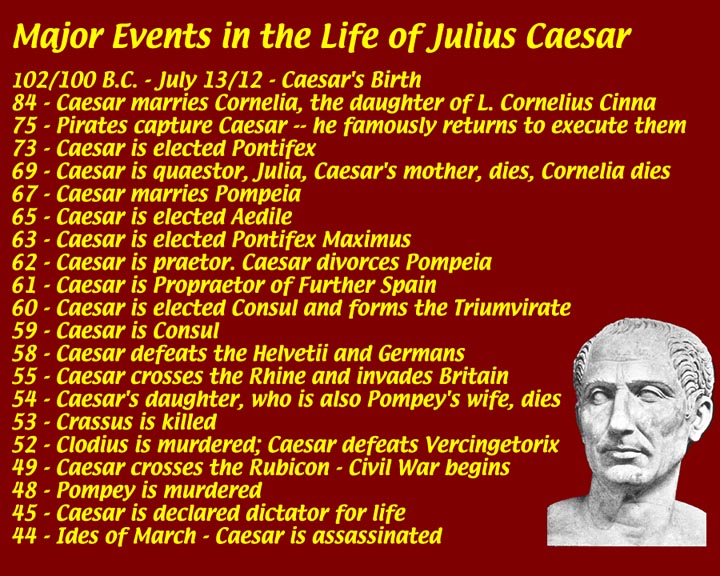
<---Concise curriculum vitae of Julius Caesar.
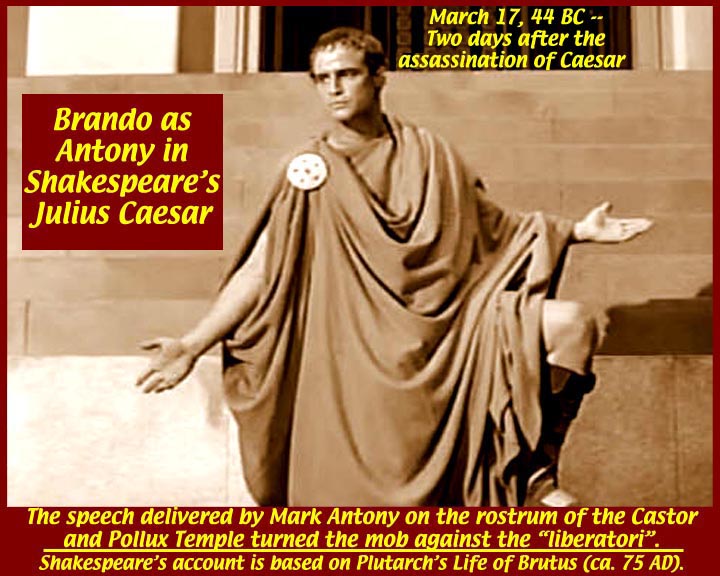
<---Marc Antony's speech, two days after Caesar's assassination was not, as far as we know, taken down verbatim, but was reconstructed after the fact. Shakespeare's version, apparently, is as accurate as any.
According to supposedly eye-witness accounts, Antony did not really put Caesar's body on display, but rather had a rotating manikin dressed in Caesar's robes, on which he showed where the knives had struck.
Antony's speech had the results shown by Shakespeare
(who shortened the time scale). The makeshift "altar" where Caesar's body was creamaterd is still visible in Rome and is a place where neofascists still place flowers
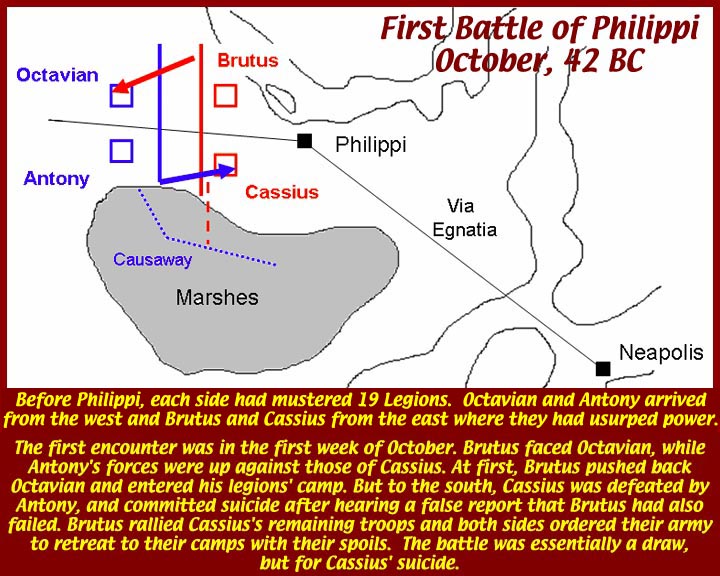
This and the folowing Image.
<---Anthony and Octavian didn't confront the Liberatori until October of 42 BC. On the 2nd of October the First Battle of Philippi was a partial victory for Antony. The Second Battle of Philippiwas 21 days later (23 october) ended with Brutus and Cassius dead, both by suicide.
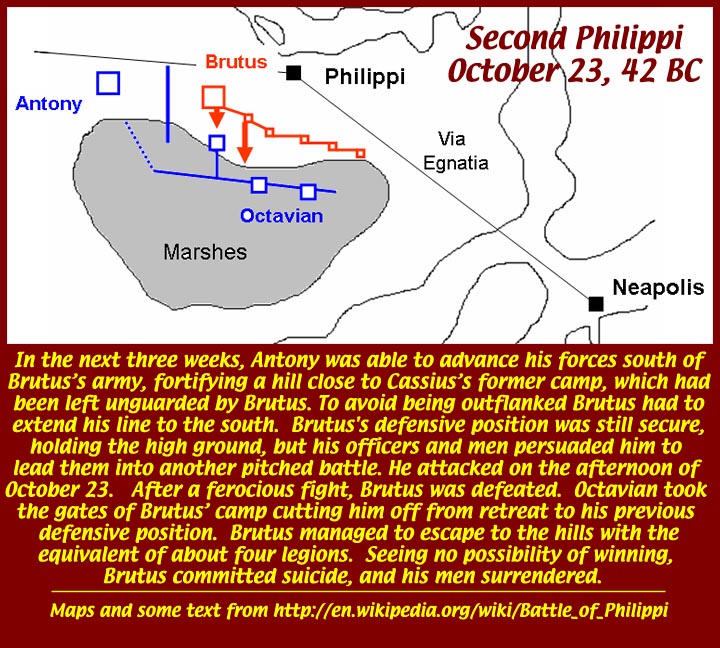
<---See above.
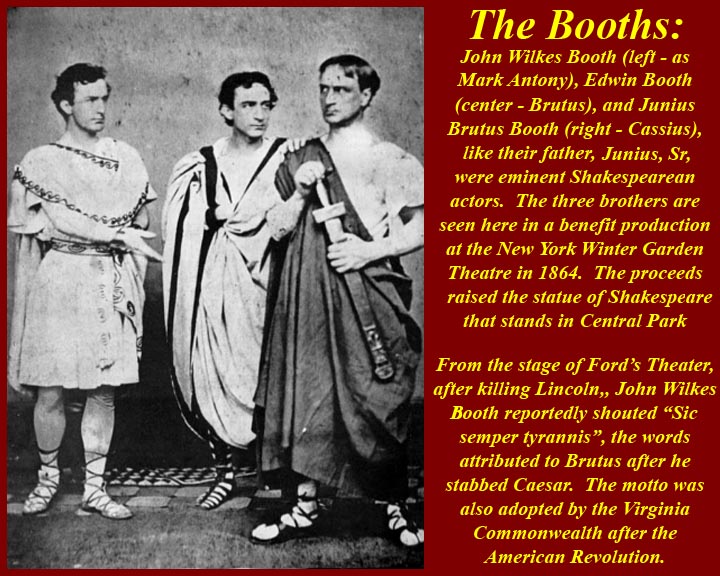
<---Famous acting family, the Booths.
Cleopatra
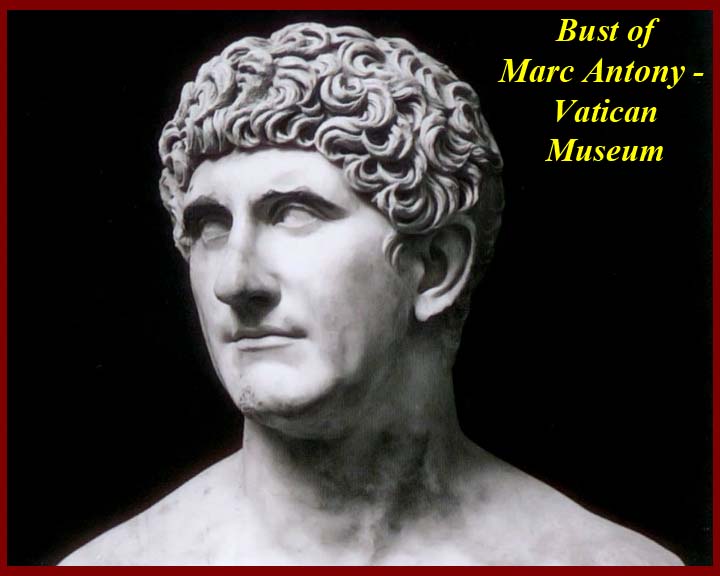
<---First century portrait bust of Mark Antony, one of the few surviving images of Antony. (Many were destroyed afterCeasar Agustus had ordered Antoy's damnatio memoriae).
Portrait sculptures are considered by experts to be very accurate representations of the looks of their subjects. This bust of Antony is considered to be a reference image from the 1st century AD.
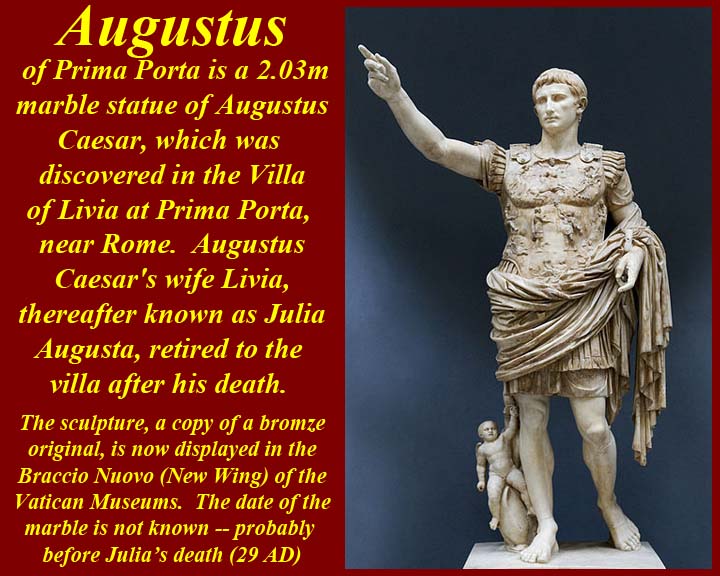
<---The defining Augustus as Victor image, copy of a bronze statue, is in the Rome Capitoline Museum.
-PalMassiimoAlleTerme.jpg)
<---Octavian married his older full sister, Octavia Minora (the Jounger), to Marc Antony in an attempt to end the Octavian/Antony rivalry -- but he may have anticipated that Antony would not be faithful. Antony parked Octavia in Athens and soon joined Cleopatra in a long affair and an Egyptian wedding that produced three children.
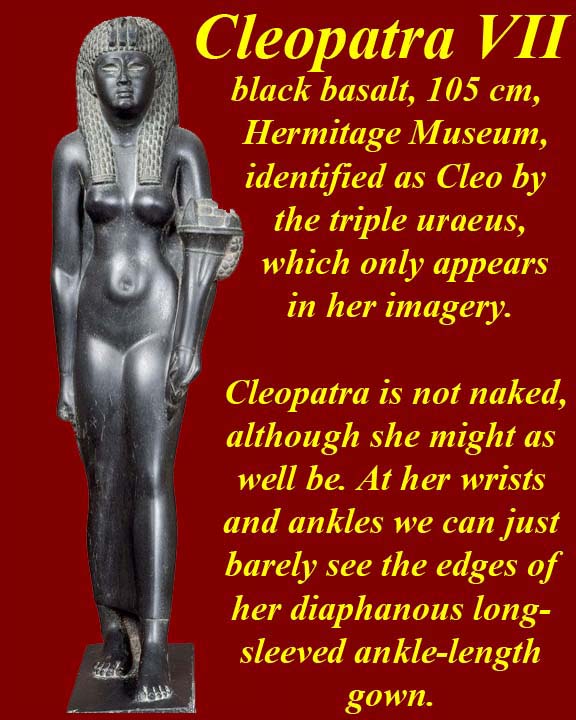
<---Cleopatra famously in a see-through ceremonial dress.
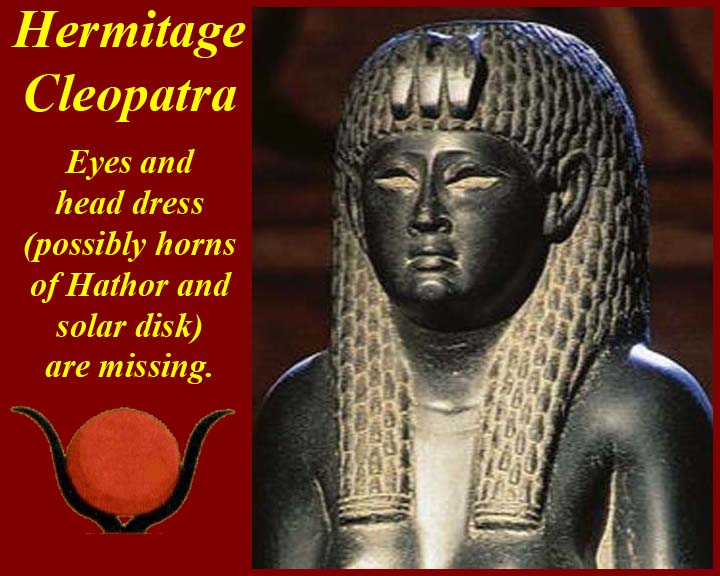
<---Cleopatra's tripple ureaus identify the statue. Other royal women mounte one or two.
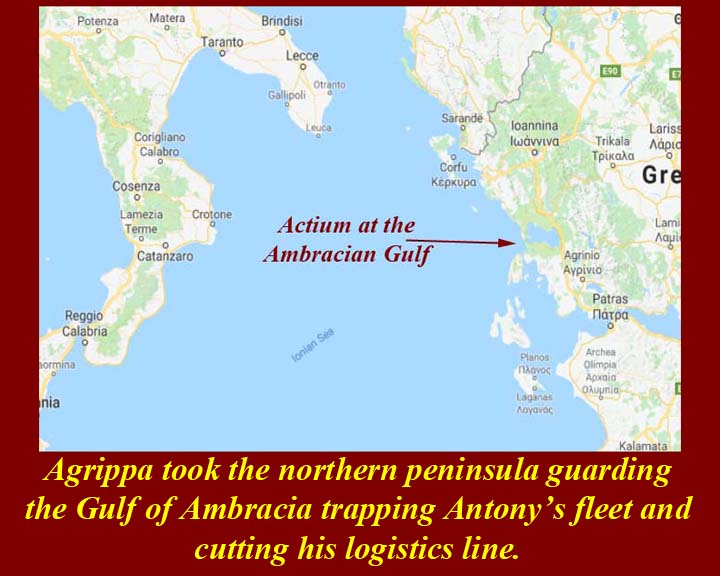
<---Actium lies at the mouth of Ambracian Gulf on the west coast of Greece
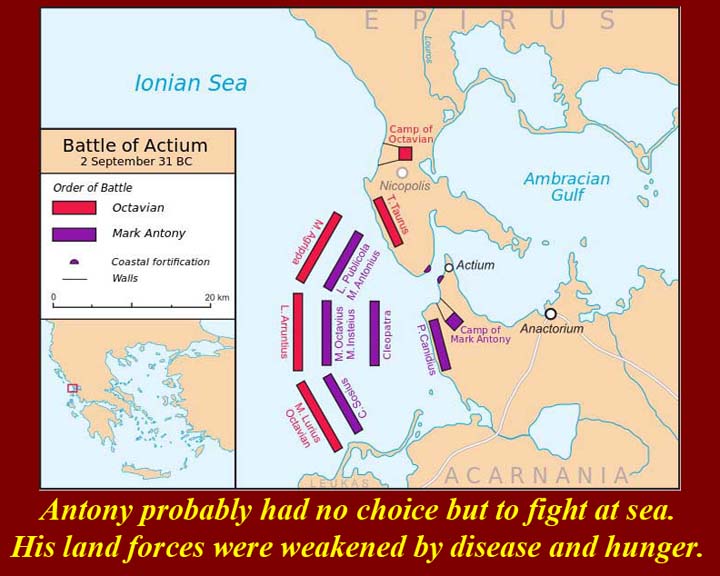
<---Agrippa, Octavian's General, establishe himself on the northern peninsula and cut off the supplies to Antony's and Cleopatra's land and naval forces. Antony listened to Cleopatra and decided to fight at sea. Durung the sea battle, Cleopatra's ship slipped out from behind and fled -- and Antony followd her, leaving behind his land and naval forces. Seeing this, Anthony's men soon surrendered and, just as quickly, defected.
Cleopatra and Antony made for Alexandria with Octavian pursuing.
_maritimeMuseumGreenwichUK.jpg)
<---Restoration English representation of the Actium battle.
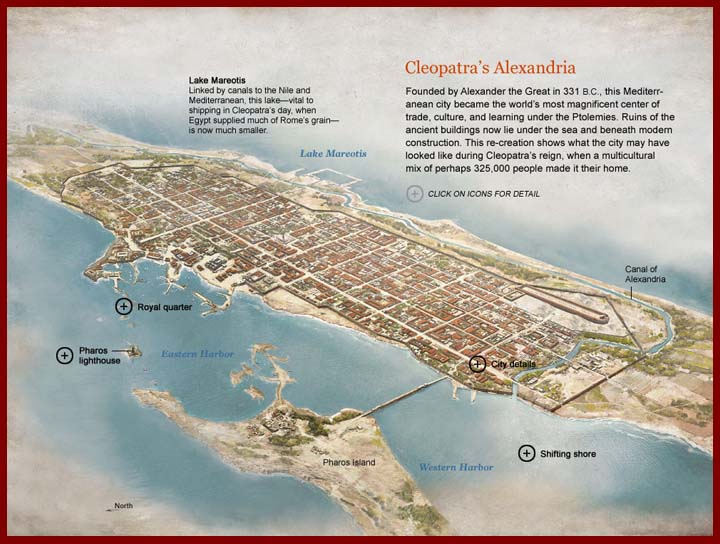
<---Cleopatra's Alexandria.
See also the next image.
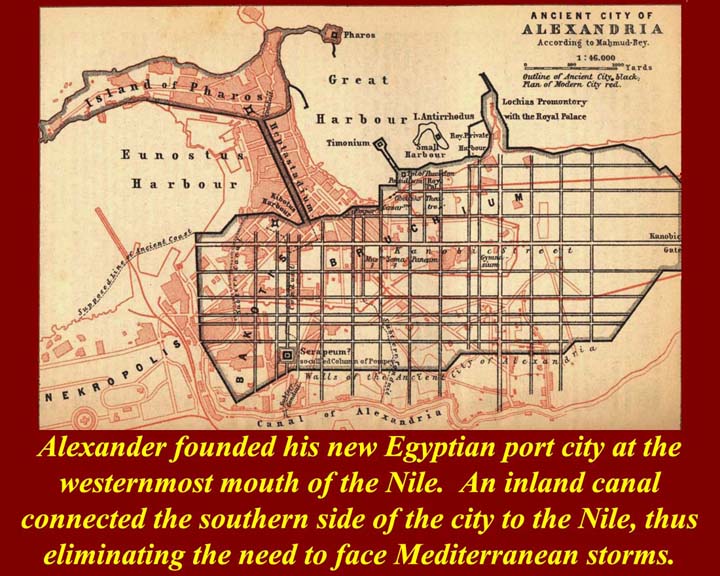
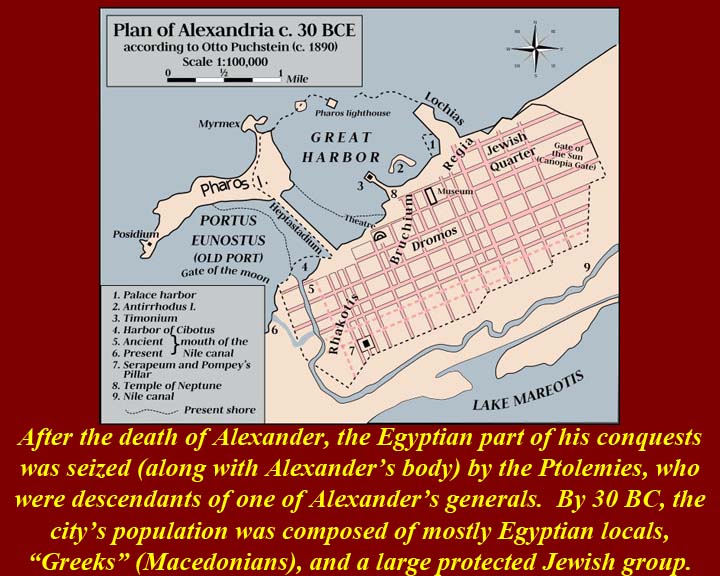
<---Plan of Alexandria in 30 BC.

<---More like a university than a mere library, the Ptolemaic Alexandria Museon was one of the City's most important ornaments. Although a port-side annex was destroyed when Julius Caesar Caesar burned his ships, the main scroll/book collection was not destroyed until later when Christian zealots destroyed most of it.
(There still remain some large (van-size) never- opened crates labeled "Alexandria" in the Vatican Library basement.)
The modern "Biblioteca Alexandrina", in addition to maintaining a large hard copy collection is fully connected to the Internet and has a large electronic connection including the serachable US Llibrary of Congress and many US and othe University collections.
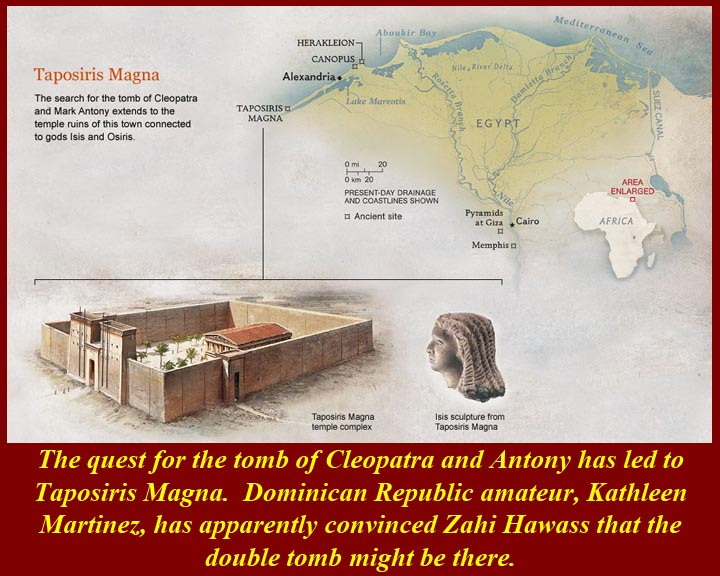
<---Zahi Hawass, in his ever continuing pursuit of personal publicity, apparently has some level of belief that following up on the beliefs in the credential-less Dominican Republic amateur is worth his effforts. Stranger things have proven true, but most other experts are demanding much more evidence than a few statues said to be of Cleo found at the site.
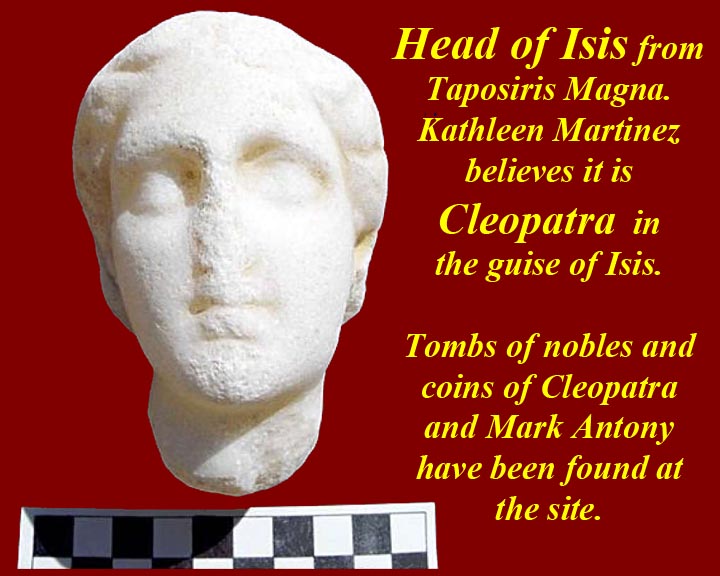
<---Some experts doubt the identification of this "head of Isis" is really Cleopatra.
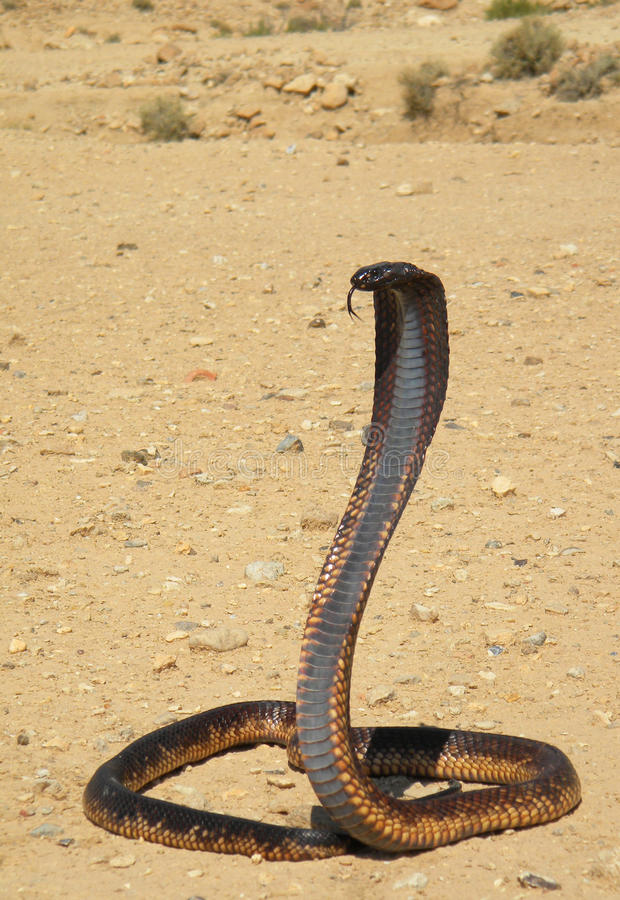
<---An Egyptian Aspis (Cobra, or in local Arabic parlance a NajaHaje of the type thought to have been used by Cleopatra to suicide. The aspis is the deadliest poisonous snake in Northern Africa, and adults of the species average about 4.6 feet long.
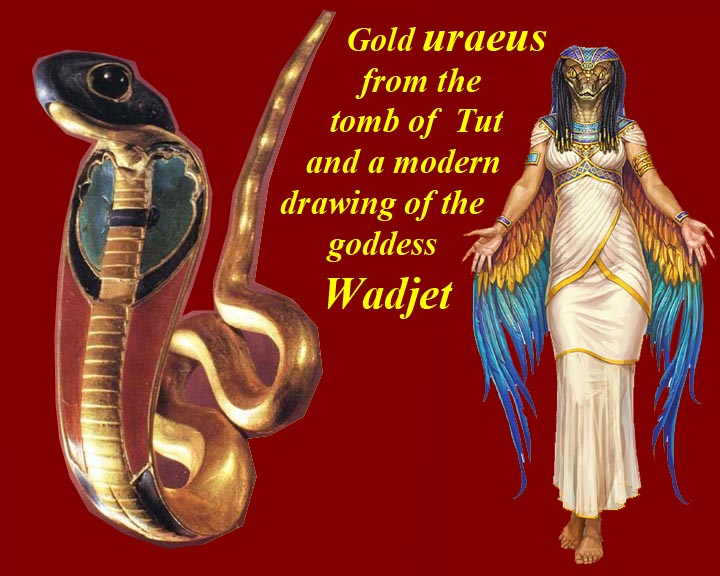
<---The Egyptian goddess Wadjet is the personification of the Aspis, and is normally considered to be friendly, a protector of stored grain. The aspis would eat grain-eating rodents.
Ancient Romans would paint images of male and female snakes near altars for household gods, again a protectors.
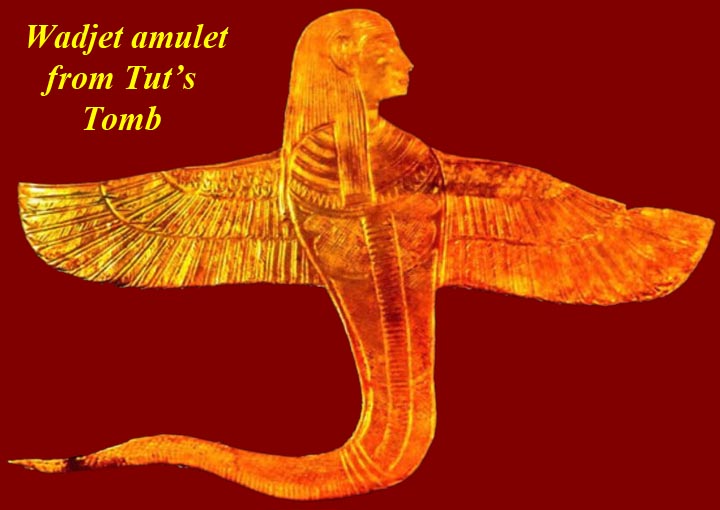
<---A different way of representing Wadjet.

<---Again, the Hermitage Cleopatra